

Sensors beneath the mattress shed light on sleep

Today’s sleep diagnostics are complex and often unrepresentative of real-life sleep conditions. The Swiss health start-up Undae Science uses sensors placed beneath the mattress to bring clinical sleep analysis into the bedroom.
Related news
Technology that moves you
The wheelchair of the future – made in Switzerland

Keeping one step ahead of the next infectious disease
According to the 2022 Swiss Health Survey, one in three people in Switzerland suffers from sleep disorders, which is a five percentage point increase compared with the previous survey. These are often linked to mental and physical health issues. Unsurprisingly, people with chronic sleep problems are also less productive at work. A study by the RAND research institute estimates the resulting economic damage in Switzerland to be around 10.2 billion US dollars per year.
Data from sleep laboratories can cause problems
To investigate sleep disorders in more detail, polysomnography in a sleep laboratory is usually required. This involves numerous electrodes and an unfamiliar environment, as well as just a single night. For many patients, this procedure is not only burdensome, but also provides a poor representation due to the artificial setting.
The Swiss health technology start-up Undae Science, founded in 2024, takes a different approach. Sleep should be measured where it actually takes place: in one's own bed. Their solution is a thin mattress topper equipped with highly sensitive pressure sensors that works entirely without direct body contact.
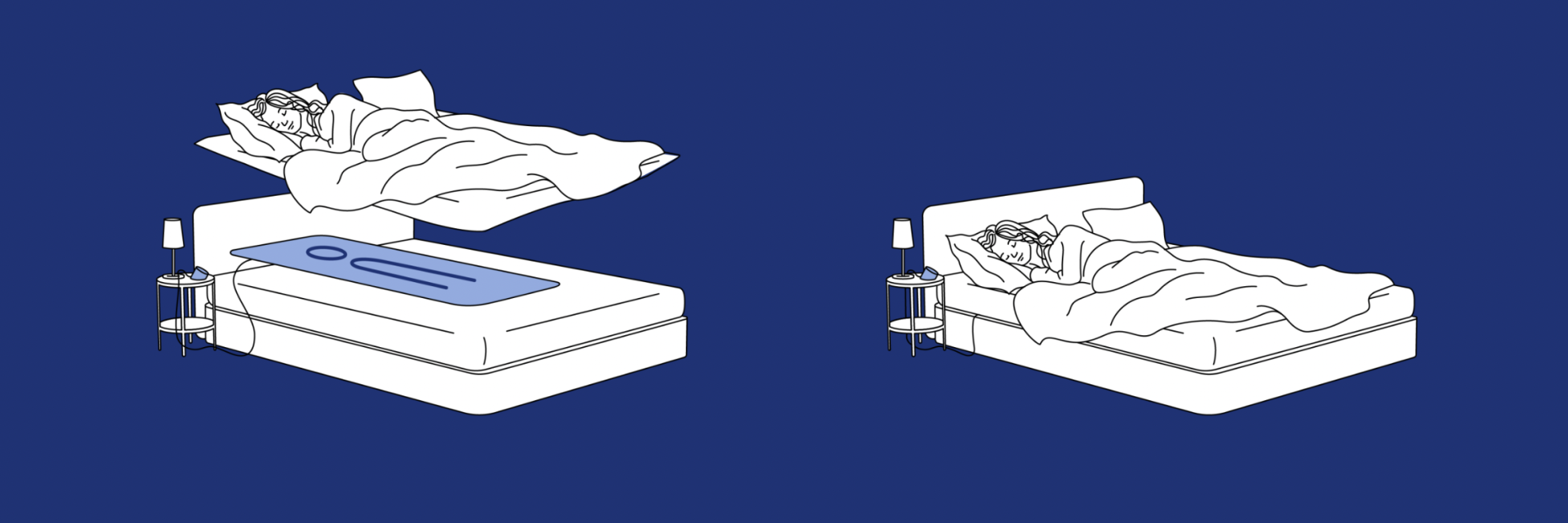
A thin mattress topper is equipped with pressure sensors to capture sleep quality.
Sensors beneath the mattress driving intelligent sleep analysis
The system, developed under the product name Noctae, records microscopic changes in pressure during the night. These data can be used to draw conclusions about breathing patterns, movement and sleep stages. The raw data are analysed via a cloud platform, where algorithms driven by artificial intelligence translate physiological signals into medically relevant parameters. These algorithms are based on over seven years of research conducted at the University of Lausanne and the Swiss Institute of Bioinformatics. The founders, Dr Shanaz Diessler and Dr Aurélie Stephan, developed these algorithms. Both founders have a background in neuroscience, focusing on sleep and brain research.
On the path to market readiness
Unlike many wearable devices, Undae Science deliberately does not focus on lifestyle tracking, but on providing a basis for clinical decision-making. Measurements taken over several nights are intended to reveal variability and facilitate the diagnosis of conditions such as sleep apnoea, periodic limb movements and fragmented sleep.
The start-up is currently in the clinical validation phase and preparing for the market entry in 2027. The founders have identified elite sport as a promising target group, as sleep quality is increasingly recognised as a performance factor in this area. With the support of funding programmes such as the Biopôle Vanguard Accelerator and Innosuisse, the team is working on pilot projects and regulatory steps, such as CE certification. Undae Science is working closely with academic partners, including EPFL Lausanne, University Hospital Basel and HEIG-VD, to achieve this.